
Safety Eyewear Programs for Pharmaceutical Manufacturing
Pharmaceutical eyewear has to satisfy two authorities at once. Safety wants impact and chemical splash protection; quality wants nothing that sheds particles or cannot be cleaned to a cleanroom standard. Add gowning - hoods, goggles and respirators worn over the top - and fit becomes a specification rather than a preference.
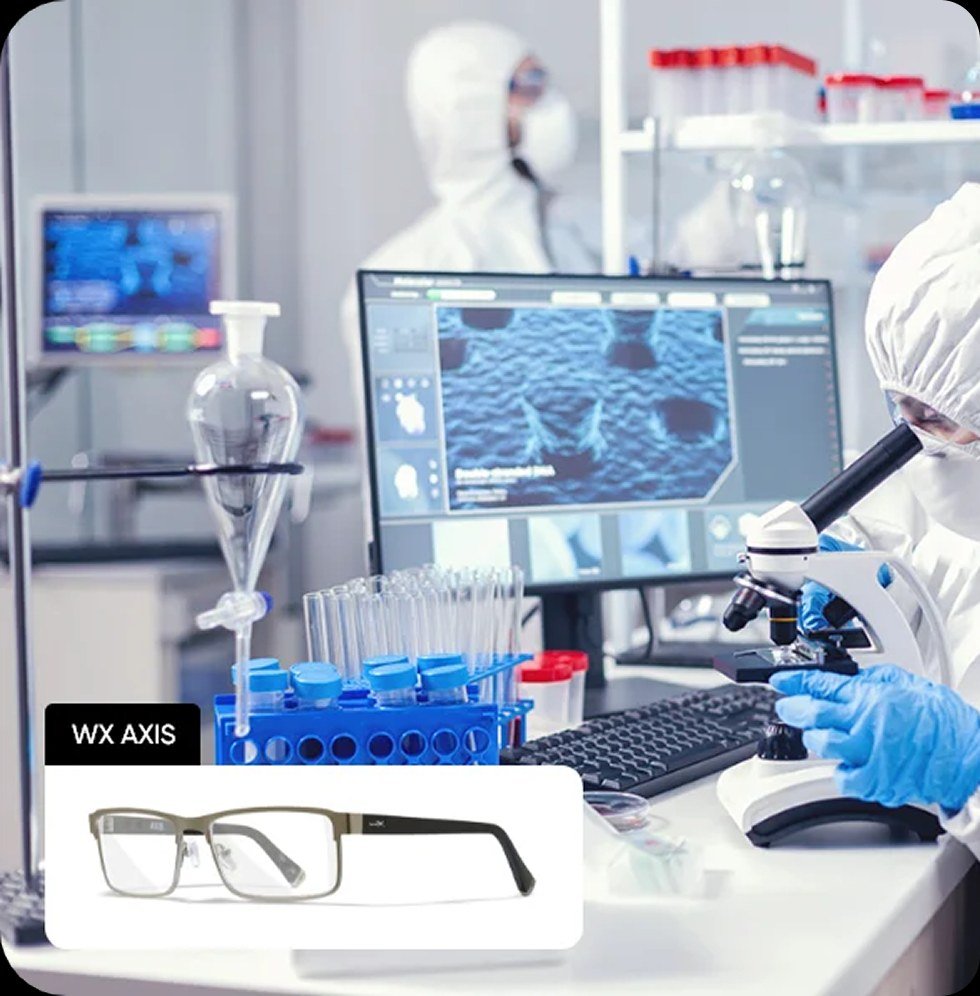
Eye Hazards in Pharmaceuticals
Chemical and reagent splash
Solvents, acids and active compounds splash during dispensing and transfer. D3-marked protection is the baseline; high-risk transfers warrant goggles over prescription frames.
Particle shedding
Textured frame surfaces and worn coatings shed. In classified areas the eyewear is part of the contamination picture and has to be assessed as such.
Sanitisation degradation
Repeated IPA wipe-down and autoclave cycles attack coatings and plastics. Frames must be specified for the actual cleaning method in use, not assumed compatible.
Gowning interference
Eyewear worn under hoods and with respirators shifts, presses and fogs. Low-profile temples and a confirmed respirator-compatible fit prevent staff adjusting protection mid-task.
What the Standards Require
Protection performance follows ANSI/ISEA Z87.1 under OSHA 29 CFR 1910.133, with D3 splash marking where reagents and solvents are handled. Cleanroom classification under ISO 14644 then governs materials and cleaning: frames must tolerate the site's sanitisation regime without degrading or shedding.
Markings are the practical check: if a prescription frame does not carry Z87-2, it is not compliant protective eyewear regardless of how it is sold. Our labs supply every pair marked to the ratings your hazard assessment calls for.
Recommended Specification
Lens
Polycarbonate, Z87+, D3 splash marked, with permanent anti-fog for gowned and respirator work.
Frame
Z87-2 marked, smooth low-shedding surfaces, low-profile temples that sit correctly under a hood.
Cleaning compatibility
Confirm frame and coating tolerance for the site's specific regime - IPA wipe, autoclave or both - before standardising.
Controlled areas
Where classification demands it, dedicate eyewear to the area rather than allowing it to move in and out with the wearer.
How the Program Works
We set the eligibility rules, allowances and approved frame list with you, then employees order for themselves through the benefits-managed marketplace - so nobody handles expense claims and you keep a live compliance record. Every pair is made to prescription in an OSHA-compliant lab and shipped direct. See the full frame and lens range, or start with a 12-frame sample kit so your team can handle the frames before you commit. Writing the policy first? Download our free safety eyewear policy template.
Related industries
Frequently Asked Questions
Does the employer have to pay for prescription safety glasses in Pharmaceuticals?
It depends on the eyewear. Under OSHA 29 CFR 1910.132(h) the employer must pay for required PPE, but there is a specific exemption: non-specialty prescription safety eyewear does not have to be employer-paid provided the employer lets employees wear it off the job site. Anything specialty - prescription inserts, sealed or gasketed frames, welding filters, or eyewear that cannot reasonably leave site - falls back under the employer-pays rule. Most Pharmaceuticals programs are funded anyway, because a company-paid allowance is what actually drives compliance.
Can standard safety frames be used in a classified cleanroom?
Not automatically. Frames must tolerate your sanitisation regime - IPA wipe-down, autoclave or both - without degrading or shedding particles. Confirm material compatibility against the actual cleaning method before standardising, and consider dedicating eyewear to the area.
How do we stop eyewear fogging under gowning and respirators?
Specify permanent anti-fog and low-profile temples that sit correctly under a hood. Fogging under gowning is the most common reason staff break the gowning seal to adjust eyewear, which is both a contamination and an exposure event.
Launch a safety eyewear program for your Pharmaceuticals team
Tell us how many employees need prescription protection and where they work, and we will map the specification and allowances to your sites.