
Safety Eyewear Programs for Industrial Service Contractors
Contractors have a problem their clients do not: the hazard changes every job. A crew may work a refinery turnaround, a food plant and a construction site inside a month, each with its own PPE matrix and its own site rules. The workable answer is a single specification that clears the strictest site the crew attends, rather than a per-site scramble.
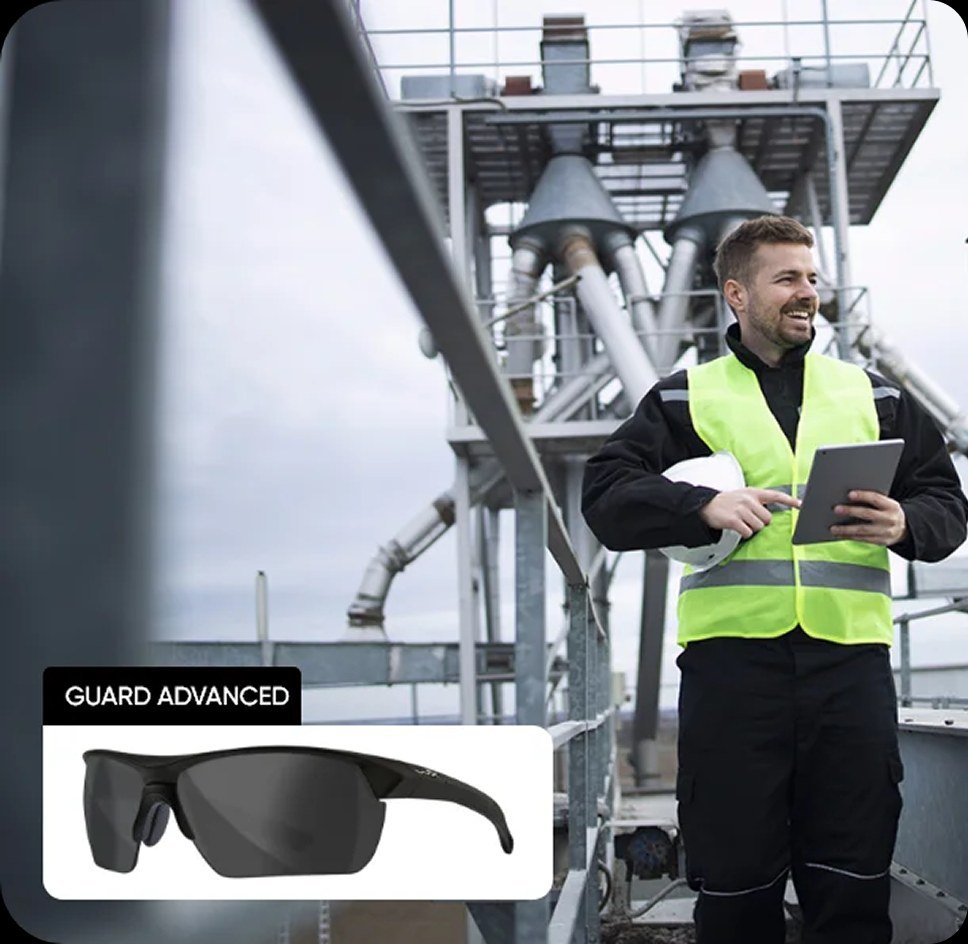
Eye Hazards in Industrial Services
Hazard profile changes per job
Impact, dust, splash and glare in different combinations week to week. A single-purpose lens will be wrong somewhere in the rotation.
Conflicting client site rules
Host sites mandate different markings, colours and styles. Specifying above the strictest requirement avoids a crew being turned away at a gate.
Mobile workforce logistics
Crews are rarely near a fixed base. Fulfilment has to reach a jobsite or a hotel, not a head office.
Turnover and rapid onboarding
New crew need compliant prescription eyewear before their first shift, not weeks later. Onboarding speed is the whole game.
What the Standards Require
Contract work falls under OSHA 29 CFR 1910.133, or 1926.102 on construction projects, with performance to ANSI/ISEA Z87.1. Because host sites impose their own additional requirements, contractors should specify to the highest common denominator - typically Z87+ with D3 and D4 markings, on Z87-2 frames.
Markings are the practical check: if a prescription frame does not carry Z87-2, it is not compliant protective eyewear regardless of how it is sold. Our labs supply every pair marked to the ratings your hazard assessment calls for.
Recommended Specification
Lens
Polycarbonate, Z87+ with D3 and D4 markings, so one pair clears the majority of host site matrices.
Tint strategy
Two-pair issue - clear plus U6 tinted - covers indoor and outdoor jobs without a per-job decision.
Frame
Z87-2 marked, gasket-compatible so a dust seal can be added for the sites that demand it.
Fulfilment
Direct-to-jobsite shipping and a fast onboarding path for new starters and short-notice crew changes.
How the Program Works
We set the eligibility rules, allowances and approved frame list with you, then employees order for themselves through the benefits-managed marketplace - so nobody handles expense claims and you keep a live compliance record. Every pair is made to prescription in an OSHA-compliant lab and shipped direct. See the full frame and lens range, or start with a 12-frame sample kit so your team can handle the frames before you commit. Writing the policy first? Download our free safety eyewear policy template.
Related industries
Frequently Asked Questions
Does the employer have to pay for prescription safety glasses in Industrial Services?
It depends on the eyewear. Under OSHA 29 CFR 1910.132(h) the employer must pay for required PPE, but there is a specific exemption: non-specialty prescription safety eyewear does not have to be employer-paid provided the employer lets employees wear it off the job site. Anything specialty - prescription inserts, sealed or gasketed frames, welding filters, or eyewear that cannot reasonably leave site - falls back under the employer-pays rule. Most Industrial Services programs are funded anyway, because a company-paid allowance is what actually drives compliance.
How do we meet different client site PPE rules with one specification?
Specify to the strictest site your crews attend rather than per job. In practice that is Z87+ with D3 and D4 markings on a Z87-2 frame, which clears most host site matrices without a gate discussion.
How fast can new crew be issued compliant eyewear?
That is the real constraint for contractors, not specification. Onboarding needs to produce a prescription pair before the first shift, shipped to a jobsite or hotel rather than a head office the crew will never visit.
Launch a safety eyewear program for your Industrial Services team
Tell us how many employees need prescription protection and where they work, and we will map the specification and allowances to your sites.