
Safety Eyewear Programs for Construction Crews
Construction sites combine every eye hazard at once: airborne grit, cutting and grinding debris, overhead work, and full sun. Crews move between enclosed areas and open ground all day, and eyewear that fogs on the first climb gets pushed onto a hard hat brim and stops protecting anyone. A construction program has to survive the site, sit correctly under a hard hat, and still correct vision.
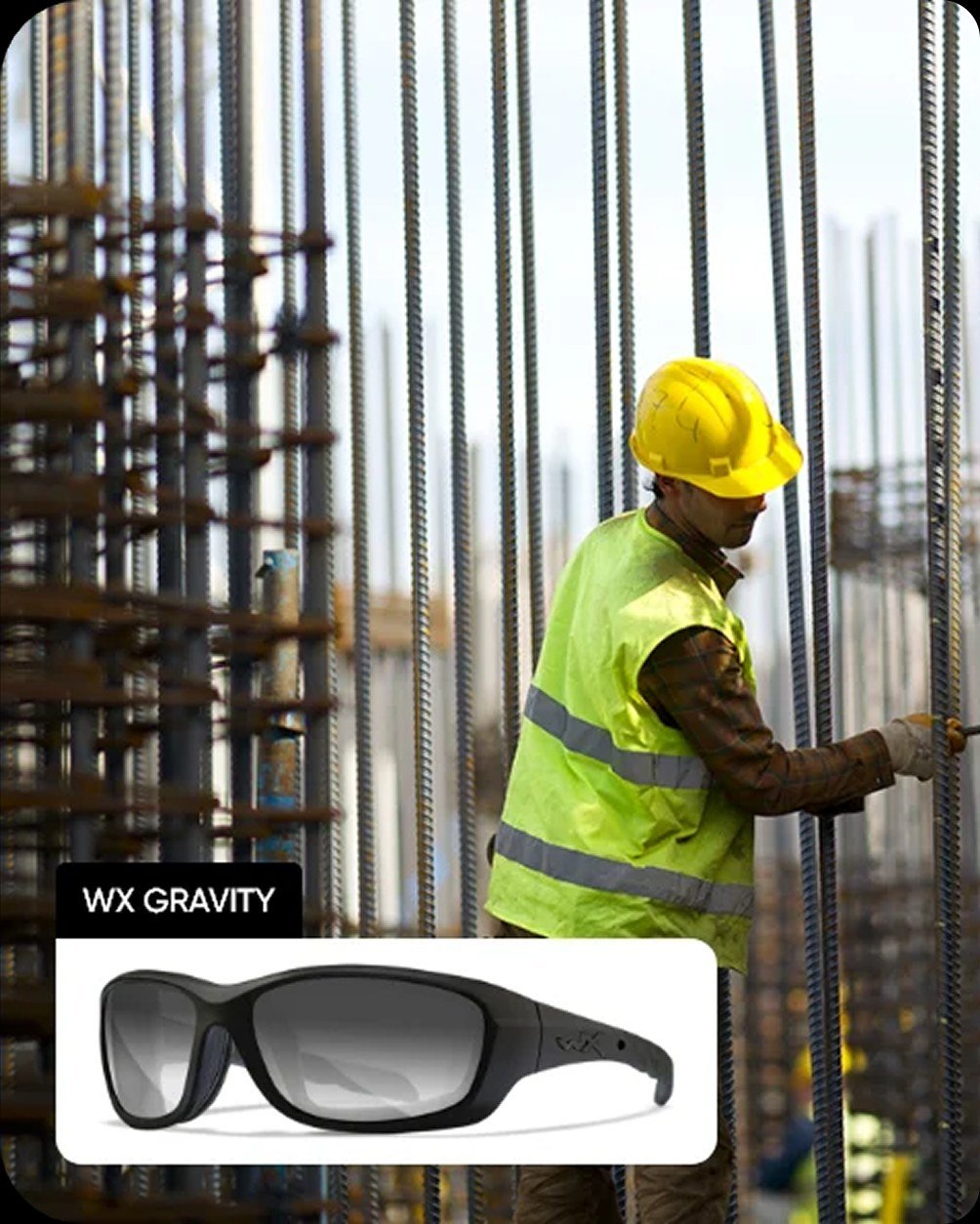
Eye Hazards in Construction
Flying debris and fragments
Cutting, chipping, nailing and demolition throw fragments at speed and from unpredictable angles. This is the hazard that justifies Z87+ high-impact lenses and side protection rather than basic-impact eyewear.
Silica and airborne grit
Concrete, masonry and dry sweeping put fine particulate in the air that works around loose-fitting lenses. Foam-gasketed or wrap frames with a D4 or D5 dust rating hold a seal where open frames do not.
Sun and UV exposure
Outdoor crews take a full shift of UV and glare. Untinted indoor lenses cause squinting and eye strain, which is why most construction programs need a tinted or photochromic option alongside a clear pair.
Temperature and humidity swings
Moving from a heated enclosure into cold air, or working in humidity under exertion, fogs an untreated lens instantly. A quality anti-fog coating is the difference between eyewear that stays on and eyewear that comes off.
What the Standards Require
Construction work sits under OSHA 29 CFR 1926.102 rather than the general industry rule, and it points to ANSI/ISEA Z87.1 for performance. In practice that means impact-rated protection for anyone exposed to flying particles, and prescription wearers need frames carrying the Z87-2 marking - a standard optical frame with hardened lenses is not compliant no matter how tough it looks.
Markings are the practical check: if a prescription frame does not carry Z87-2, it is not compliant protective eyewear regardless of how it is sold. Our labs supply every pair marked to the ratings your hazard assessment calls for.
Recommended Specification
Lens
Polycarbonate, Z87+ high impact. It is the practical baseline for impact and carries inherent UV absorption.
Tint strategy
Issue two pairs, or a photochromic lens. Crews that work indoors and outdoors on the same shift will not carry a case, so a single clear pair leaves them squinting outside and a single dark pair unusable inside.
Coatings
Anti-fog is non-negotiable. Add a hard anti-scratch coat - dust plus sleeve-wiping destroys an uncoated lens within weeks.
Frame
Z87-2 marked, hard hat compatible with a low-profile temple, and either wrap style or foam gasketed if silica or dry sweeping is routine.
How the Program Works
We set the eligibility rules, allowances and approved frame list with you, then employees order for themselves through the benefits-managed marketplace - so nobody handles expense claims and you keep a live compliance record. Every pair is made to prescription in an OSHA-compliant lab and shipped direct. See the full frame and lens range, or start with a 12-frame sample kit so your team can handle the frames before you commit. Writing the policy first? Download our free safety eyewear policy template.
Related industries
Frequently Asked Questions
Does the employer have to pay for prescription safety glasses in Construction?
It depends on the eyewear. Under OSHA 29 CFR 1910.132(h) the employer must pay for required PPE, but there is a specific exemption: non-specialty prescription safety eyewear does not have to be employer-paid provided the employer lets employees wear it off the job site. Anything specialty - prescription inserts, sealed or gasketed frames, welding filters, or eyewear that cannot reasonably leave site - falls back under the employer-pays rule. Most Construction programs are funded anyway, because a company-paid allowance is what actually drives compliance.
Can construction workers just wear their own glasses with side shields?
No. Ordinary prescription spectacles are not impact rated, and clip-on side shields do not make them compliant. Prescription protective eyewear must be built on a frame marked Z87-2, with lenses rated to the impact level the task requires.
Do we need tinted and clear pairs for the same crew?
Usually yes. Crews that move between enclosed areas and open ground in one shift will not carry a spare case, so a single dark pair becomes unusable indoors and a single clear pair leaves them squinting outside. Two pairs, or a photochromic lens, is the practical answer.
Launch a safety eyewear program for your Construction team
Tell us how many employees need prescription protection and where they work, and we will map the specification and allowances to your sites.