
Safety Eyewear Programs for Mining, Oil & Gas
Extraction sites are hard on eyewear and hard to reach. Crews face drilling dust, hydrocarbon and chemical splash, extreme temperature ranges and long rotations, often hundreds of miles from an optical store. The eyewear specification matters, but so does the logistics: a program that cannot get a replacement pair to a remote site inside a rotation is a program that leaves people unprotected.
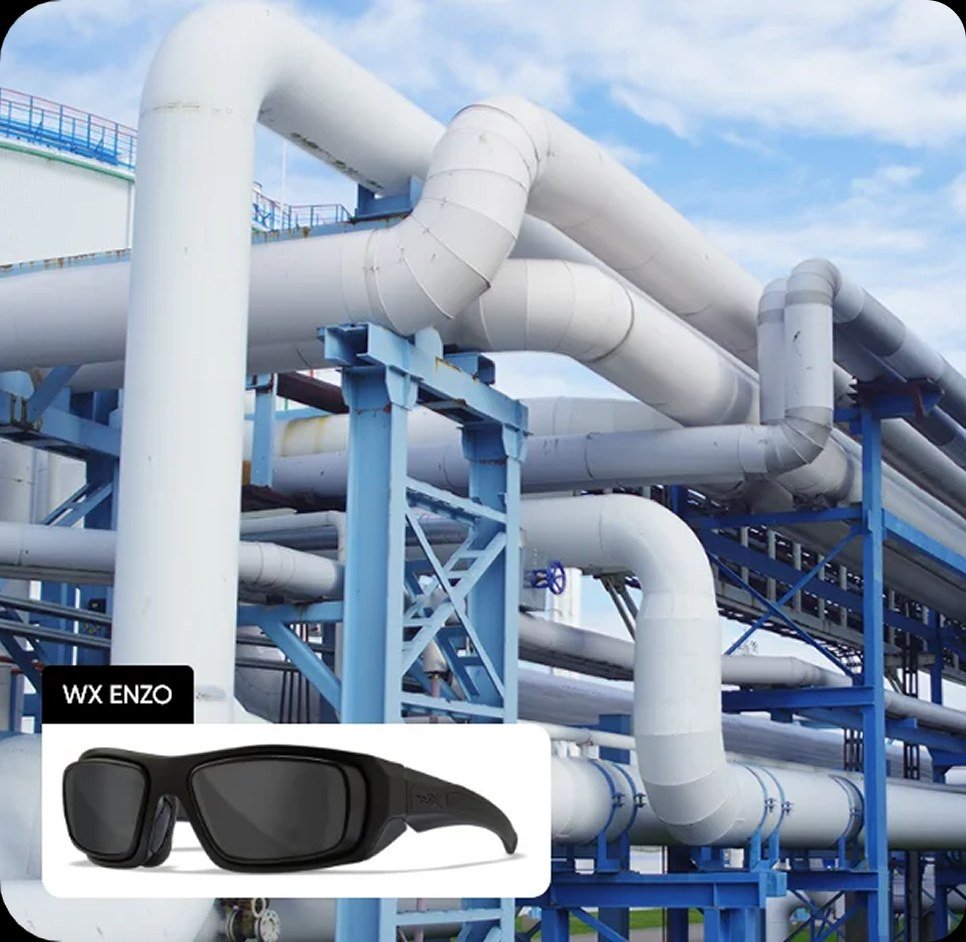
Eye Hazards in Mining, Oil & Gas
Drilling and haul road dust
Fine, continuous airborne particulate is the defining exposure. Open-temple frames let dust in behind the lens; sealed or gasketed eyewear rated D4 or D5 is the practical answer.
Chemical and drilling fluid splash
Mud, solvents, acids and hydrocarbons splash during connections and maintenance. D3-rated protection and, for high-risk tasks, goggles or a face shield worn over prescription safety frames.
Extreme temperature and glare
Desert sun, snow glare and unlit underground work in the same operation. Underground crews need maximum light transmission; surface crews need genuine UV and glare control.
Remote site logistics
A broken pair on a remote rotation can mean weeks without compliant vision correction. Replacement turnaround and shipping to site is a genuine safety variable, not an administrative detail.
What the Standards Require
Operations fall under OSHA 29 CFR 1910.133, with protection performance defined by ANSI/ISEA Z87.1. Sites with chemical or drilling-fluid exposure should specify the D3 splash and D4 dust markings explicitly, and prescription wearers need Z87-2 frames. Where flame-resistant PPE is mandated, frame material needs to be confirmed against site policy.
Markings are the practical check: if a prescription frame does not carry Z87-2, it is not compliant protective eyewear regardless of how it is sold. Our labs supply every pair marked to the ratings your hazard assessment calls for.
Recommended Specification
Lens
Polycarbonate, Z87+ high impact, with a U6 UV rating for surface and daylight operations.
Sealing
Foam-gasketed or fully sealed frames rated D4/D5 wherever drilling, haul roads or dry material handling generate continuous dust.
Coatings
Permanent anti-fog plus a hard anti-scratch coat. Gasketed eyewear restricts airflow, so anti-fog matters more here, not less.
Program design
Pre-positioned spare inventory and direct-to-site shipping. Build replacement lead time into the program rather than assuming a local optical visit.
How the Program Works
We set the eligibility rules, allowances and approved frame list with you, then employees order for themselves through the benefits-managed marketplace - so nobody handles expense claims and you keep a live compliance record. Every pair is made to prescription in an OSHA-compliant lab and shipped direct. See the full frame and lens range, or start with a 12-frame sample kit so your team can handle the frames before you commit. Writing the policy first? Download our free safety eyewear policy template.
Related industries
Frequently Asked Questions
Does the employer have to pay for prescription safety glasses in Mining, Oil and Gas?
It depends on the eyewear. Under OSHA 29 CFR 1910.132(h) the employer must pay for required PPE, but there is a specific exemption: non-specialty prescription safety eyewear does not have to be employer-paid provided the employer lets employees wear it off the job site. Anything specialty - prescription inserts, sealed or gasketed frames, welding filters, or eyewear that cannot reasonably leave site - falls back under the employer-pays rule. Most Mining, Oil and Gas programs are funded anyway, because a company-paid allowance is what actually drives compliance.
What markings should we specify for drilling and haul road dust?
Look for D4 (dust) and, where fine particulate is constant, D5. For drilling fluids and chemical handling add D3 for splash. All on a Z87-2 frame with Z87+ high-impact lenses.
How do we handle replacements on remote rotations?
Build it into the program rather than treating it as an exception. Pre-positioned spare inventory at the camp or field office plus direct-to-site shipping means a broken pair costs hours, not the rest of a rotation.
Launch a safety eyewear program for your Mining, Oil and Gas team
Tell us how many employees need prescription protection and where they work, and we will map the specification and allowances to your sites.