
Safety Eyewear Programs for Food Packaging & Processing
Food environments add a constraint no other industry has: the eyewear itself is a contamination risk. A screw, nose pad or lens fragment that leaves a frame and enters product is a recall event. On top of that, staff cross between chilled and ambient areas constantly, and standard lenses fog every single time - which is why compliance so often slips in food plants.
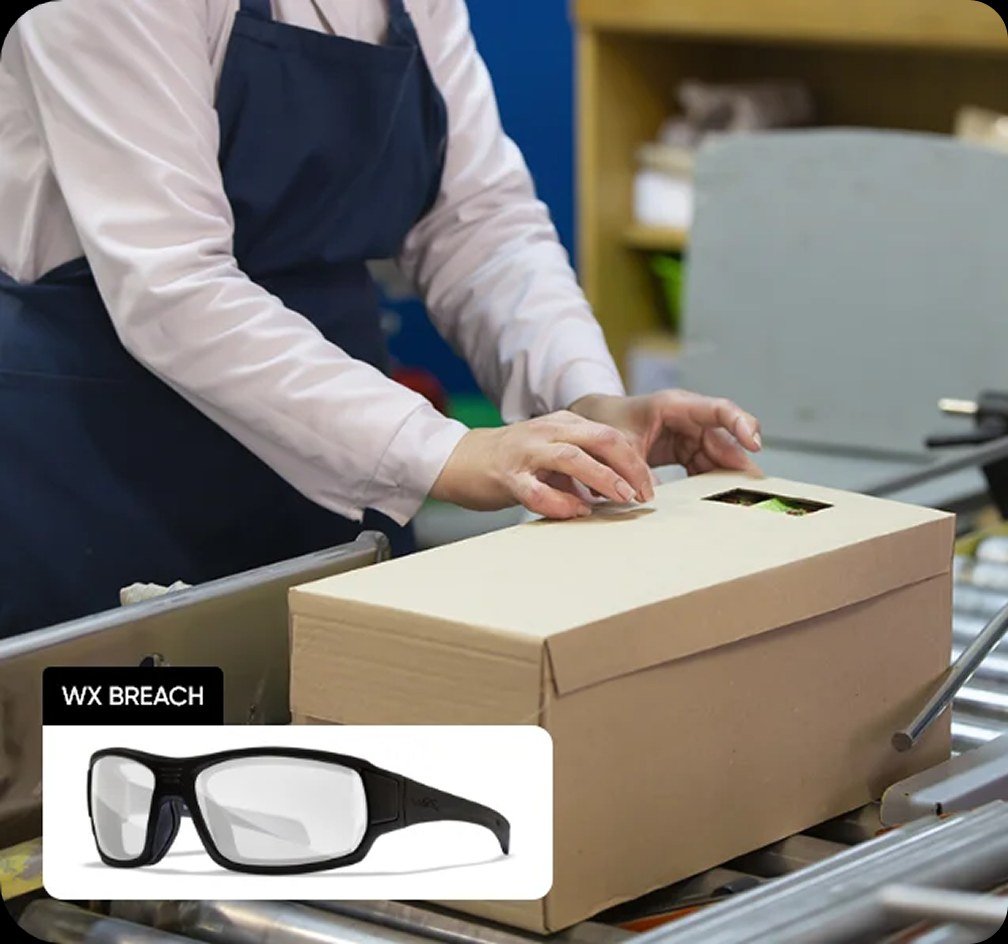
Eye Hazards in Food Packaging
Foreign body contamination
Frames shed screws, nose pads and hinge pins. Metal-detectable frame components or one-piece designs let the plant's existing detection line catch a part before it reaches product.
Cold-to-ambient fogging
Chillers, freezers and washdown humidity fog untreated lenses on every transition. Staff lift eyewear to see, and that moment of non-compliance is exactly when a hazard occurs.
Sanitation chemicals
Caustic and acid washdown chemistry splashes during cleaning. D3-rated splash protection is appropriate for sanitation crews even where the packing line itself is low risk.
High-pressure washdown
Frames are cleaned aggressively and repeatedly. Coatings that survive a domestic wipe do not survive daily chemical sanitation, so coating durability should be specified deliberately.
What the Standards Require
Eye protection performance is set by ANSI/ISEA Z87.1 under OSHA 29 CFR 1910.133, but food sites layer their own HACCP and foreign-body controls on top. Those controls - not OSHA - are usually what drive the requirement for metal-detectable or one-piece frames, so the program specification has to be agreed with quality, not just safety.
Markings are the practical check: if a prescription frame does not carry Z87-2, it is not compliant protective eyewear regardless of how it is sold. Our labs supply every pair marked to the ratings your hazard assessment calls for.
Recommended Specification
Lens
Polycarbonate, Z87+, with a genuinely durable permanent anti-fog - the single highest-value specification in a food plant.
Frame
Z87-2 marked. Metal-detectable or one-piece construction wherever the site's foreign-body policy requires it; confirm with quality before rollout.
Colour
Brightly coloured frames are common in food sites for the same reason as detectable components - a dropped blue frame is visible against product and equipment.
Sanitation crews
Specify D3 splash protection separately for cleaning teams; their exposure differs from line staff and often gets overlooked.
How the Program Works
We set the eligibility rules, allowances and approved frame list with you, then employees order for themselves through the benefits-managed marketplace - so nobody handles expense claims and you keep a live compliance record. Every pair is made to prescription in an OSHA-compliant lab and shipped direct. See the full frame and lens range, or start with a 12-frame sample kit so your team can handle the frames before you commit. Writing the policy first? Download our free safety eyewear policy template.
Related industries
Frequently Asked Questions
Does the employer have to pay for prescription safety glasses in Food Packaging?
It depends on the eyewear. Under OSHA 29 CFR 1910.132(h) the employer must pay for required PPE, but there is a specific exemption: non-specialty prescription safety eyewear does not have to be employer-paid provided the employer lets employees wear it off the job site. Anything specialty - prescription inserts, sealed or gasketed frames, welding filters, or eyewear that cannot reasonably leave site - falls back under the employer-pays rule. Most Food Packaging programs are funded anyway, because a company-paid allowance is what actually drives compliance.
Do safety glasses need to be metal detectable in a food plant?
OSHA does not require it - your own HACCP and foreign-body policy does. Because frames can shed screws, pads and hinge pins, many plants specify metal-detectable components or one-piece frames so the existing detection line can catch a part. Agree this with quality, not just safety.
What actually stops lenses fogging between chilled and ambient areas?
A permanent, bonded anti-fog rather than a wipe-on treatment. Wipe-ons wear off within days of washdown. This is the single highest-value specification in a food plant, because fogging is what makes staff lift their eyewear.
Launch a safety eyewear program for your Food Packaging team
Tell us how many employees need prescription protection and where they work, and we will map the specification and allowances to your sites.