
Safety Eyewear Programs for Automotive Teams
Automotive work spans a wider hazard range than almost any other single site. One technician may grind, weld, handle battery acid and work under a vehicle in the same shift, and each of those tasks has a different correct lens. Programs that issue one clear pair and stop there leave the welding and splash exposures uncovered.
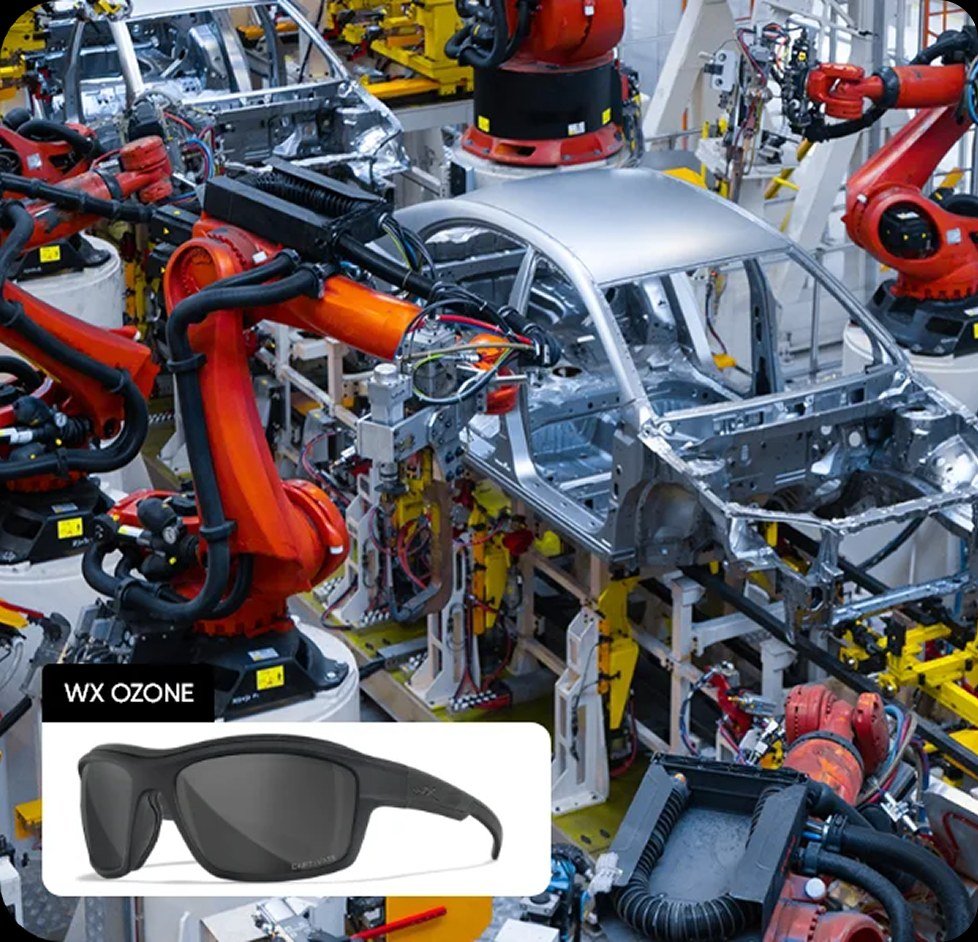
Eye Hazards in Automotive
Grinding and metal fragments
Hot, fast metal particles from grinding and cutting. This is a Z87+ high-impact exposure, and side protection matters because fragments arrive off-axis.
Battery acid and fluids
Electrolyte, brake fluid, solvents and coolant splash during service. D3-marked splash protection, with goggles for battery servicing specifically.
Welding radiation
Arc welding demands a correctly shaded filter for the process and current. Under-shading causes arc eye; over-shading causes people to lift the helmet to see.
Overhead and underbody work
Working beneath a vehicle puts debris, rust and dripping fluid directly above the eyes - the one orientation open-top frames protect worst.
What the Standards Require
Work falls under OSHA 29 CFR 1910.133 with performance to ANSI/ISEA Z87.1. Welding brings a second requirement: a filter shade appropriate to the process and amperage, specified by W-number. Safety glasses are not welding protection, and a welding helmet does not remove the need for Z87+ protection underneath during chipping and grinding.
Markings are the practical check: if a prescription frame does not carry Z87-2, it is not compliant protective eyewear regardless of how it is sold. Our labs supply every pair marked to the ratings your hazard assessment calls for.
Recommended Specification
Lens
Polycarbonate, Z87+ high impact as the site baseline for all technicians.
Welding
Correct W-shade filters matched to process and amperage, issued in addition to - never instead of - impact protection.
Splash tasks
D3-marked eyewear for fluid handling; goggles over prescription frames for battery servicing.
Frame
Z87-2 marked with integrated or wrap side protection, and a secure fit that stays put during underbody work.
How the Program Works
We set the eligibility rules, allowances and approved frame list with you, then employees order for themselves through the benefits-managed marketplace - so nobody handles expense claims and you keep a live compliance record. Every pair is made to prescription in an OSHA-compliant lab and shipped direct. See the full frame and lens range, or start with a 12-frame sample kit so your team can handle the frames before you commit. Writing the policy first? Download our free safety eyewear policy template.
Related industries
Frequently Asked Questions
Does the employer have to pay for prescription safety glasses in Automotive?
It depends on the eyewear. Under OSHA 29 CFR 1910.132(h) the employer must pay for required PPE, but there is a specific exemption: non-specialty prescription safety eyewear does not have to be employer-paid provided the employer lets employees wear it off the job site. Anything specialty - prescription inserts, sealed or gasketed frames, welding filters, or eyewear that cannot reasonably leave site - falls back under the employer-pays rule. Most Automotive programs are funded anyway, because a company-paid allowance is what actually drives compliance.
Are safety glasses enough for welding?
No. Welding needs a filter shaded to the process and amperage, specified by W-number. Impact eyewear is worn underneath a helmet for chipping and grinding - it is an addition to welding protection, never a substitute.
What do technicians need for battery and EV work?
Electrolyte splash calls for D3-marked protection, and goggles rather than glasses for battery servicing. High-voltage EV work brings arc flash considerations that sit outside standard safety eyewear and need their own assessment.
Launch a safety eyewear program for your Automotive team
Tell us how many employees need prescription protection and where they work, and we will map the specification and allowances to your sites.