
Safety Eyewear Programs for Airline Ground & MRO Crews
Airline operations run around the clock in the open. Ramp crews work in jet blast, driving rain, snow glare and full apron sun - then the same crew works a night turn under floodlights where any tint is a hazard. Maintenance teams add hydraulic fluid, solvents and confined access. One lens cannot cover that range, and pretending otherwise is how eyewear ends up on a forehead.
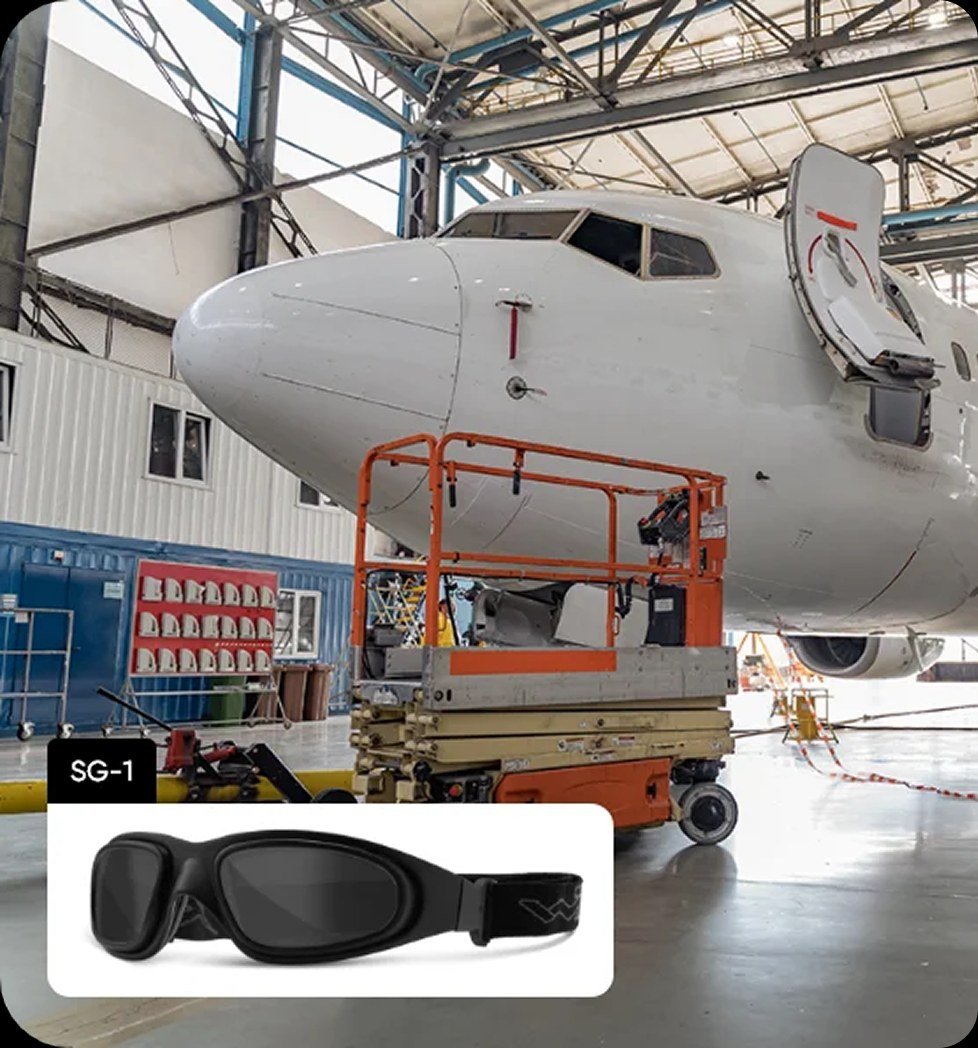
Eye Hazards in Airline
Jet blast and FOD
Engine wash and prop wash drive grit and loose debris across the apron at speed and from behind. Wrap coverage and secure retention matter more than frontal protection alone.
Day and night operations
The same role works blinding apron sun and unlit night turns. A tinted-only issue is genuinely unsafe after dark, so programs need a clear pair alongside a tinted or photochromic one.
Hydraulic fluid and solvents
Line maintenance splash during servicing, particularly overhead. D3 splash marking, with goggles for pressurised system work.
Weather extremes
Rain, snow glare and rapid temperature change fog and streak lenses. Anti-fog plus a hydrophobic coating keeps vision usable in weather.
What the Standards Require
Ground and maintenance operations sit under OSHA 29 CFR 1910.133 with performance to ANSI/ISEA Z87.1. Ramp environments justify Z87+ impact and U6 UV rating for daylight work; maintenance splash tasks justify D3. Prescription wearers need Z87-2 frames that remain compatible with ear defenders.
Markings are the practical check: if a prescription frame does not carry Z87-2, it is not compliant protective eyewear regardless of how it is sold. Our labs supply every pair marked to the ratings your hazard assessment calls for.
Recommended Specification
Lens
Polycarbonate, Z87+. Clear for night and hangar work; U6 UV-rated tinted or photochromic for daylight apron duty.
Coatings
Permanent anti-fog and a hydrophobic top coat - weather performance is the differentiator in this industry.
Frame
Z87-2 marked, wrap coverage for blast-borne debris, low-profile temples that seal correctly under ear defenders.
Issue policy
Two-pair issue is the norm for anyone working both day and night rotations; a single lens tint cannot serve both safely.
How the Program Works
We set the eligibility rules, allowances and approved frame list with you, then employees order for themselves through the benefits-managed marketplace - so nobody handles expense claims and you keep a live compliance record. Every pair is made to prescription in an OSHA-compliant lab and shipped direct. See the full frame and lens range, or start with a 12-frame sample kit so your team can handle the frames before you commit. Writing the policy first? Download our free safety eyewear policy template.
Related industries
Frequently Asked Questions
Does the employer have to pay for prescription safety glasses in Airline?
It depends on the eyewear. Under OSHA 29 CFR 1910.132(h) the employer must pay for required PPE, but there is a specific exemption: non-specialty prescription safety eyewear does not have to be employer-paid provided the employer lets employees wear it off the job site. Anything specialty - prescription inserts, sealed or gasketed frames, welding filters, or eyewear that cannot reasonably leave site - falls back under the employer-pays rule. Most Airline programs are funded anyway, because a company-paid allowance is what actually drives compliance.
Can one pair cover both day and night ramp shifts?
Safely, no. A tinted lens is genuinely hazardous on an unlit night turn, and a clear lens is punishing in apron sun. Crews working both rotations need a two-pair issue, or a photochromic lens that clears fully indoors.
Does eyewear need to work with ear defenders?
Yes, and it is routinely missed. Thick temples break the ear defender seal, degrading hearing protection. Specify low-profile temples so both PPE items work together rather than trading off against each other.
Launch a safety eyewear program for your Airline team
Tell us how many employees need prescription protection and where they work, and we will map the specification and allowances to your sites.